Saltar al contenido principal
← All videos

Linear Scaling Benchmark — 1 → 2 → 3 Nodes, Live

Watch throughput climb as nodes are added — from 1.5 million to over 4.5 million ops/sec, read straight off the console.

Watch it, or read it

The full walkthrough below — every screen from the video, with the narration transcribed. Skim it, search it, or read it in your own language.
Linear Scaling Benchmark — 1 → 2 → 3 Nodes, Live — screen 1
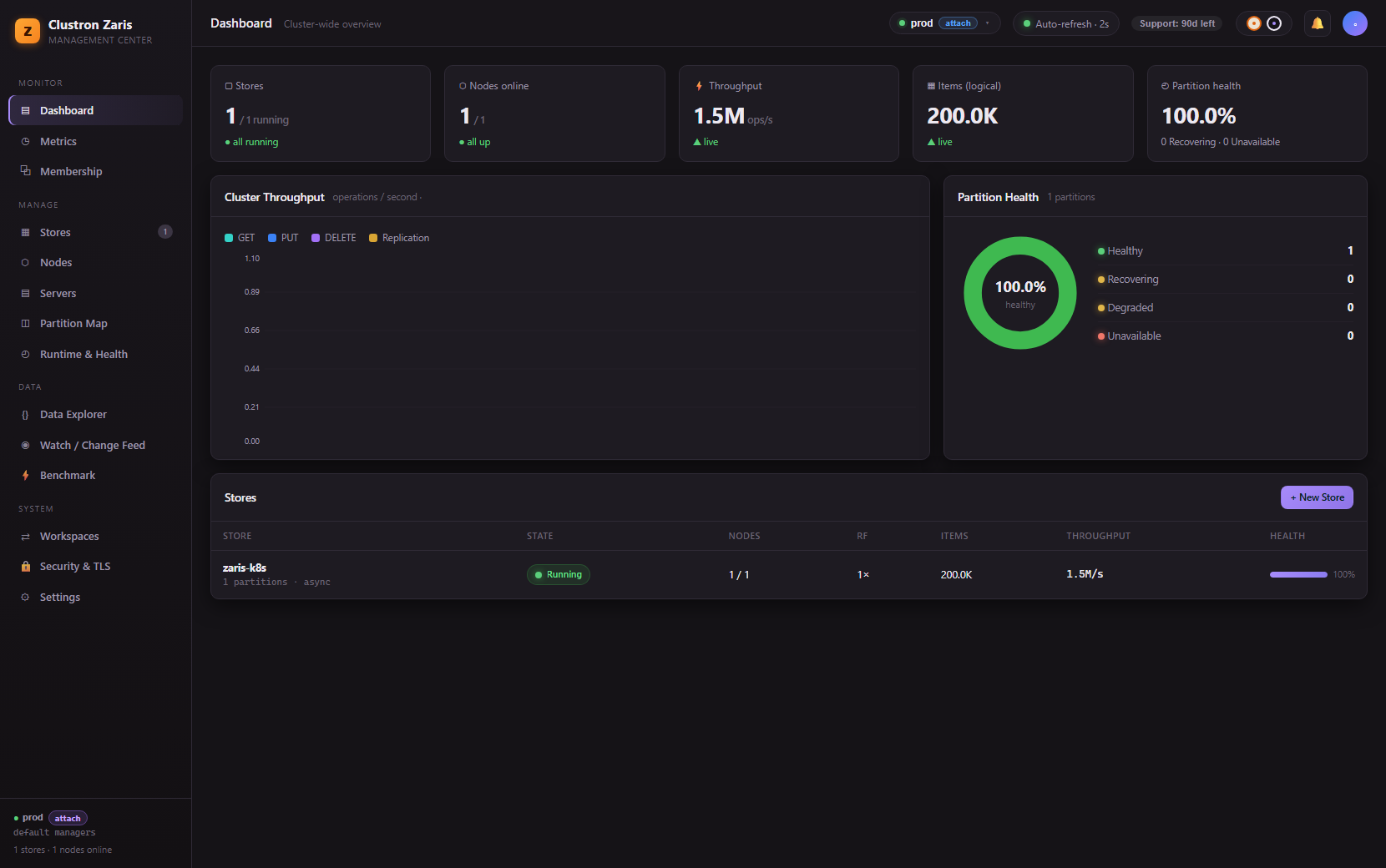
One node, under full load. The client applications are firing a 70/30 read-write mix at it, and the throughput tile climbs and settles around 1.5 million operations per second — a single eight-core machine running at nearly 100% CPU, zero errors. This is the ceiling for one node.
Linear Scaling Benchmark — 1 → 2 → 3 Nodes, Live — screen 2
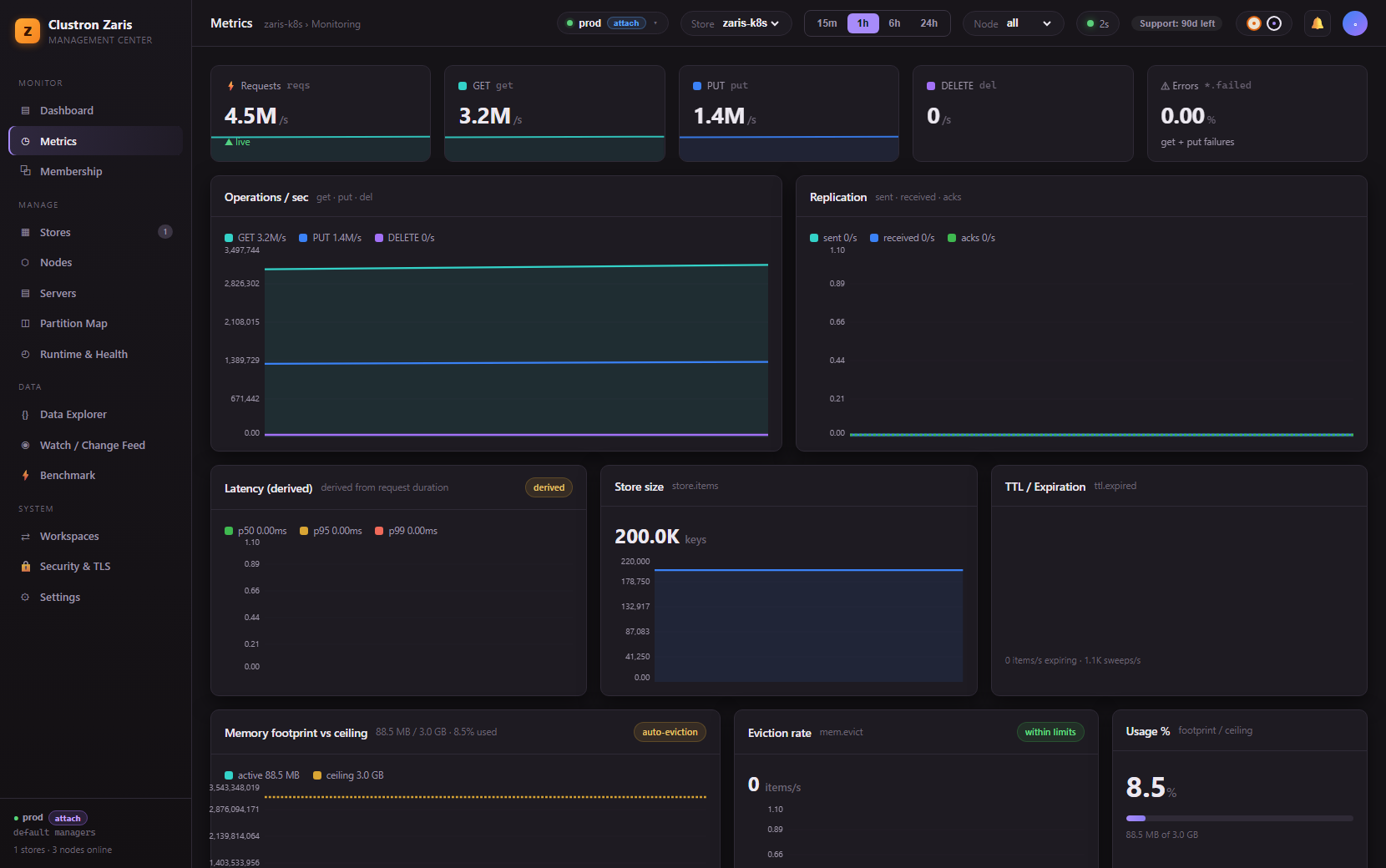
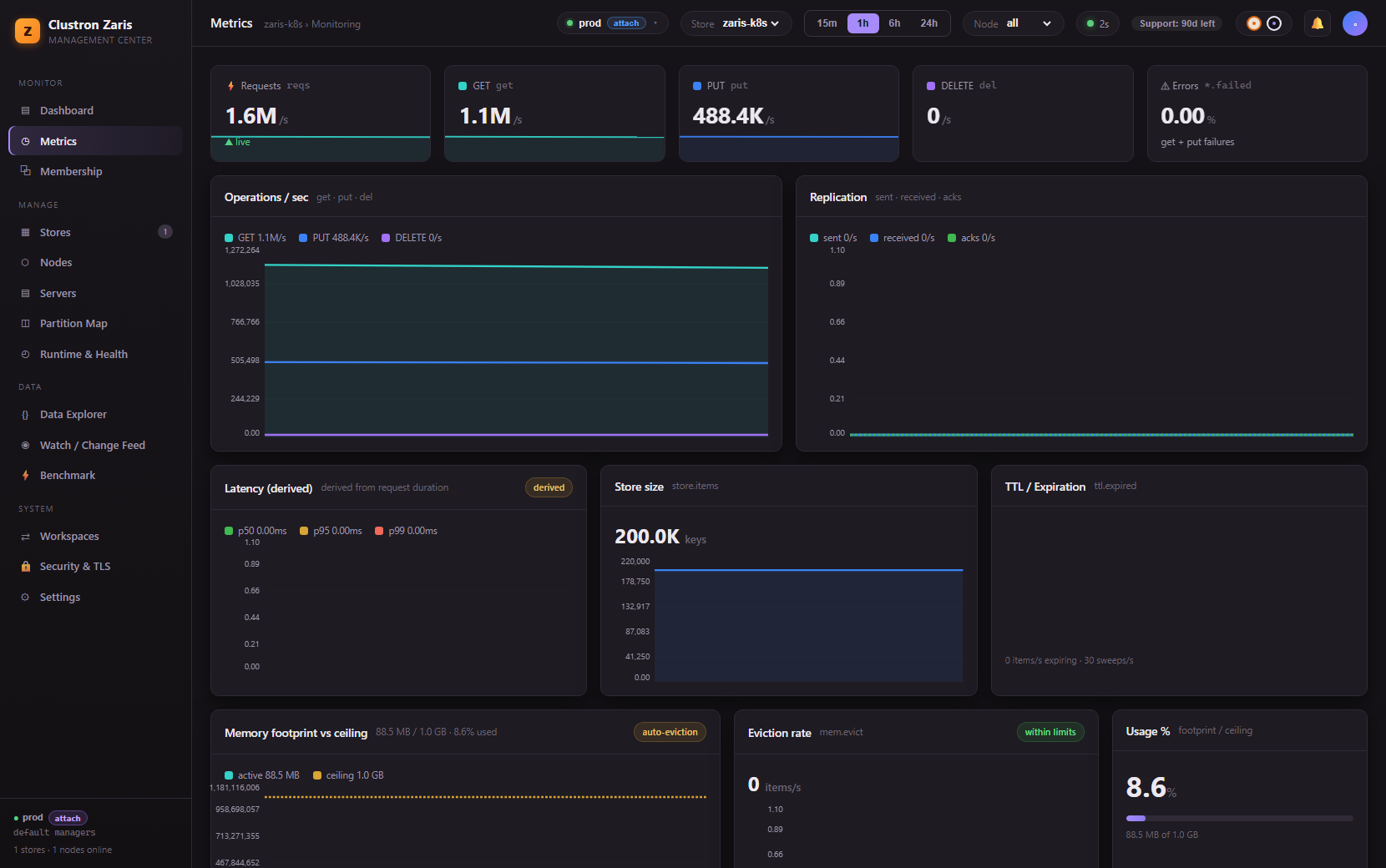
The same node in detail, on the metrics page — GET and PUT charted live, derived latency, store size, and memory footprint under 9% of its ceiling. The node is bound by CPU, not by space: nothing is getting in the way of the work.
Linear Scaling Benchmark — 1 → 2 → 3 Nodes, Live — screen 3
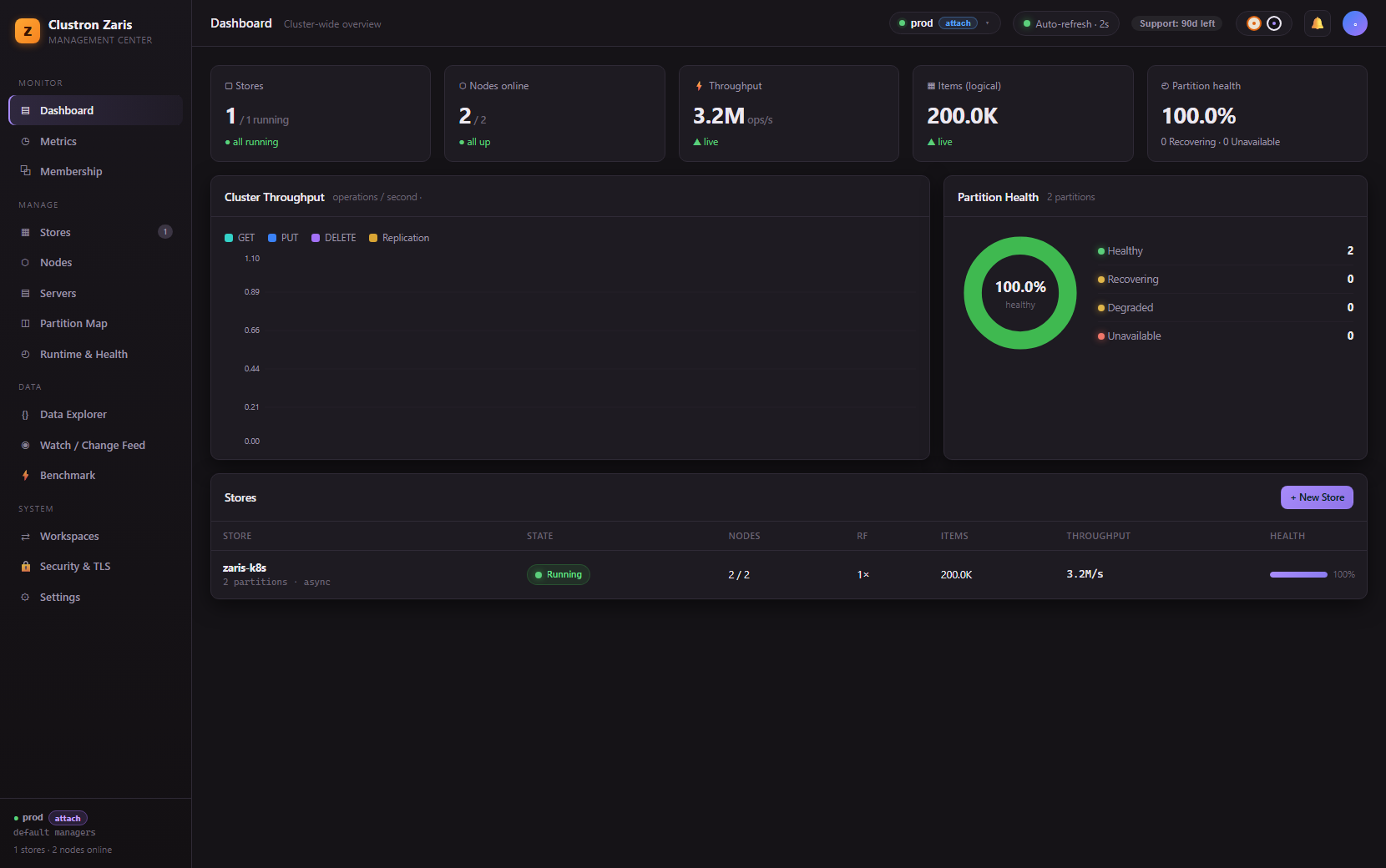
To go faster, we do not touch that node — we add another. A second node joins, and Zaris automatically rebalances, spreading the partitions across both machines — no resharding, no downtime. Watch the throughput tile climb to about 3.4 million operations per second: more than double, from one added machine.
Linear Scaling Benchmark — 1 → 2 → 3 Nodes, Live — screen 4
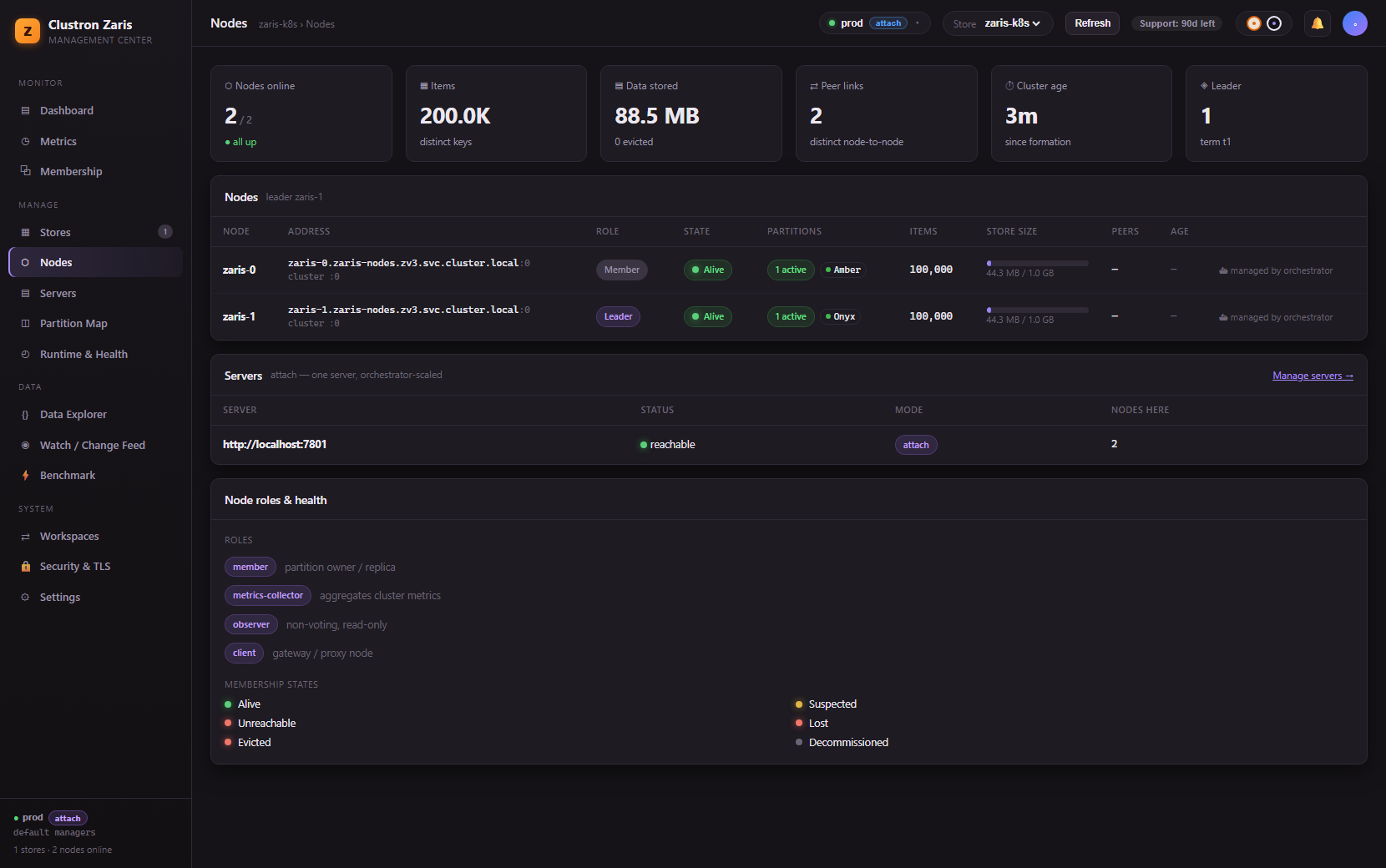
Two of two nodes online, both alive, both pulling their weight — the partitions split across the two machines, each owning its own slice of the traffic.
Linear Scaling Benchmark — 1 → 2 → 3 Nodes, Live — screen 5
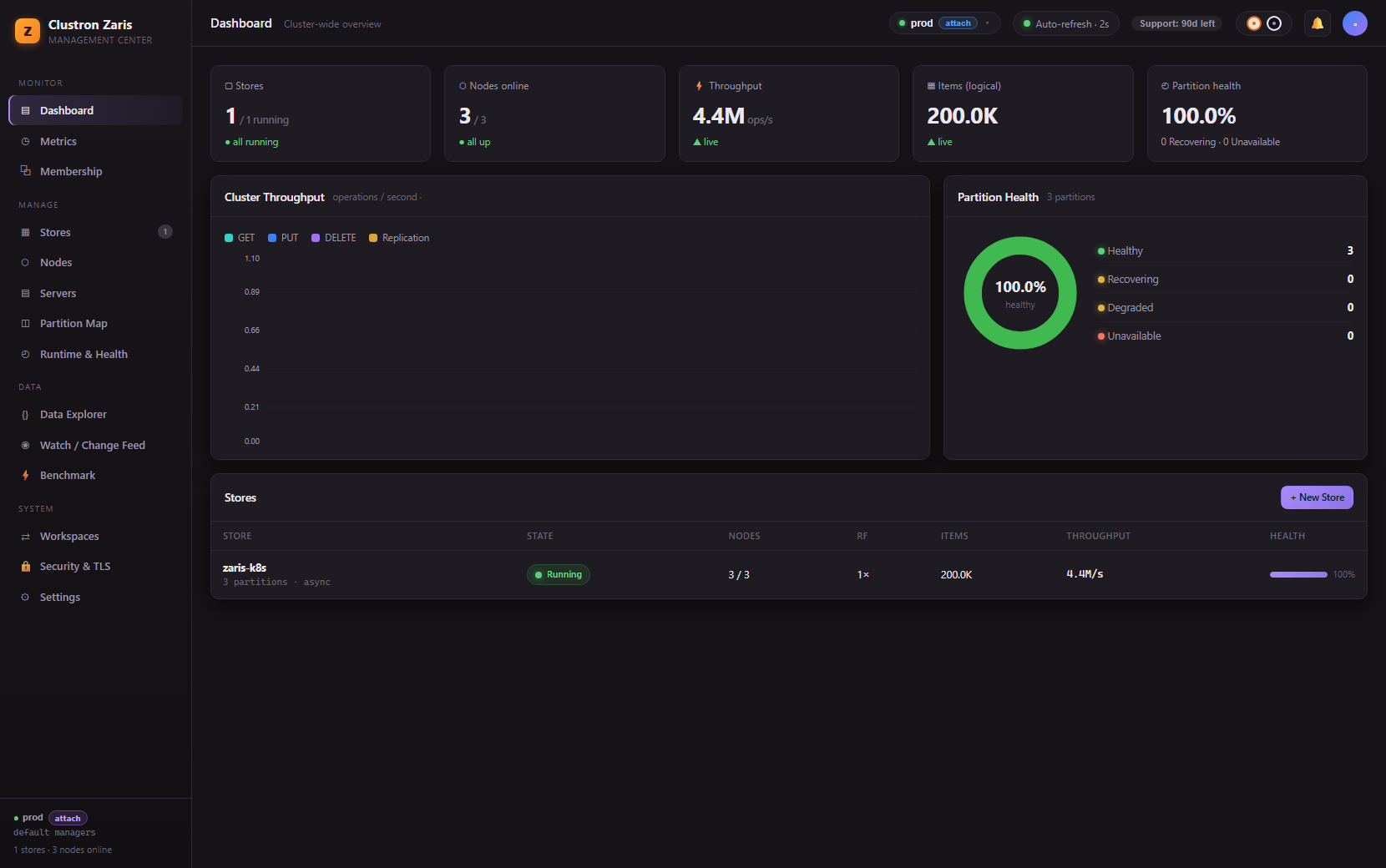
Now a third node. It joins, the partitions redistribute across all three, and we bring in a few more clients. The throughput tile climbs once more — past 4.5 million operations per second.
Linear Scaling Benchmark — 1 → 2 → 3 Nodes, Live — screen 6
Three nodes, at full tilt: over 4.5 million operations a second — GET above 3 million, PUT over 1 million — zero errors, every partition healthy. From one node to three, throughput climbed almost in step with the machines. That is near-linear scaling, live.
Linear Scaling Benchmark — 1 → 2 → 3 Nodes, Live — screen 7
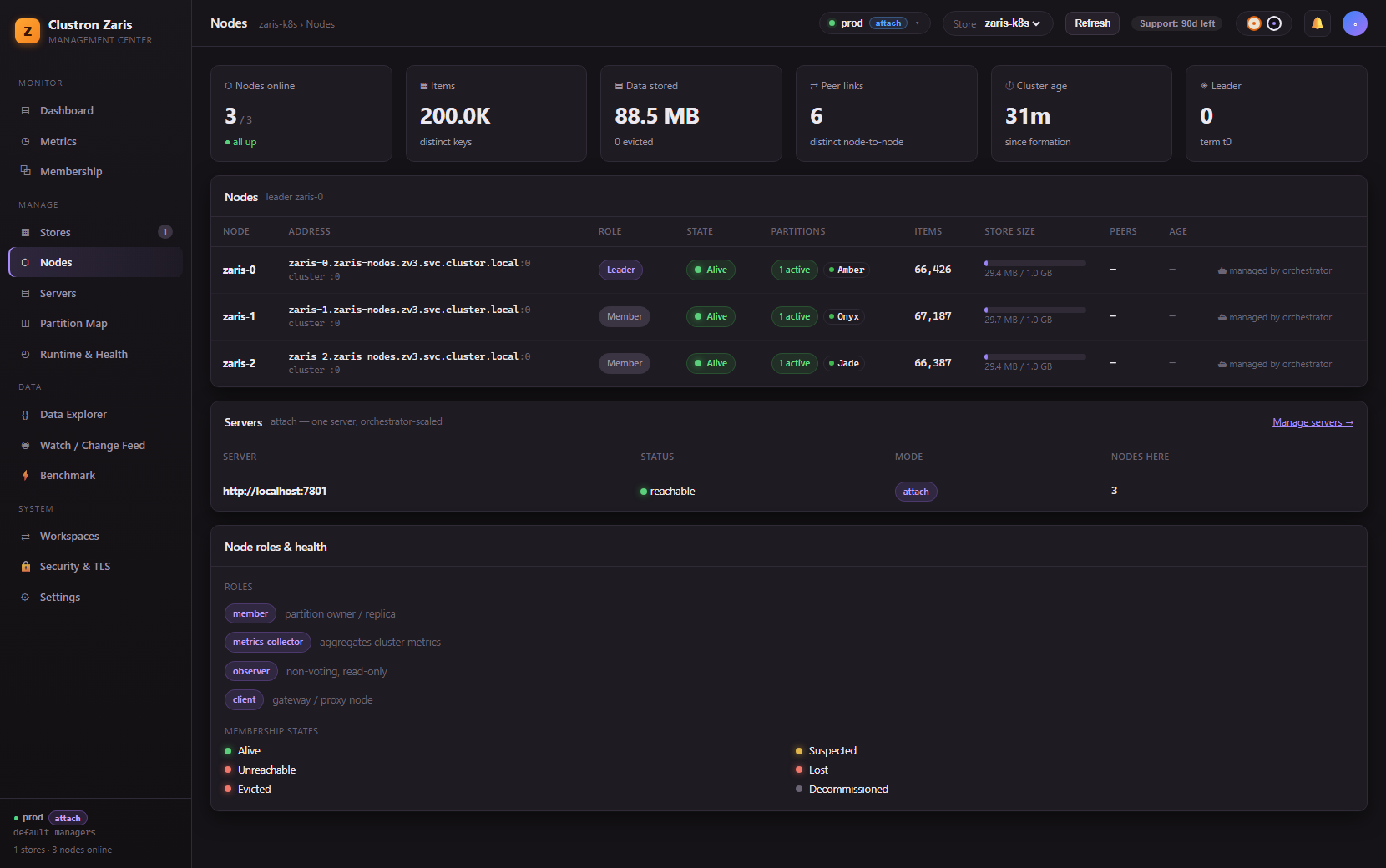
The cluster that produced it — three of three nodes, Amber, Onyx and Jade, each owning a partition and serving its share. Add a machine, and the store simply grows to use it. Add nodes, get throughput — with automatic rebalancing and no downtime. Head to clustron.io to explore the numbers and try it yourself.